Table Of Content

Other users might have read permission, but not permission to update, create or delete a resource. Authentication proves someone can log in, while authorization says they can access a resource. From high-level design to interface standards to API testing, these tips will help you tend to your burgeoning API garden. Proper error handling is crucial for building reliable APIs.
Error!
This approach is quite useful if a project is about developing externally exposed set of APIs which will be consumed by partners. In this world of microservices, a consistent design for your backend API is imperative. But this violates the property of stateless APIs, which is when an external user handles the storing of session-related information on their end. You can break the response down, like return the first thirty users, the subsequent thirty users, and the following ten users. Pagination is a method of separating digital content into different pages on a website or a response object. Imagine we want a user to be created as an admin under the admins' group table.
Versioning through content negotiation
Two-level nesting typically keeps the API simpler and gets the job done. Database security should be one of the biggest concerns for every API developer; a security breach can cost a company millions of dollars in losses. Naming conventions for REST APIs are important and can save a lot of confusion.
Common API Design Decisions
Like I said, I'd like to start with our fundamental CRUD endpoints. You've just structured the project for handling different versions. We are now passing incoming requests with "/api/v1" to our version 1 router, that will route each request to the corresponding controller method later. Before we write any API-specific code we should be aware of versioning. Like in other applications there will be improvements, new features, and stuff like that. After that we'll be extending the API with each best practice.
Be Clear with Versioning
The good thing about caching is that users can get data faster. This may also lead to issues when debugging in production environments when something goes wrong as we keep seeing old data. To eliminate confusion for API users when an error occurs, we should handle errors gracefully and return HTTP response codes that indicate what kind of error occurred. This gives maintainers of the API enough information to understand the problem that’s occurred.
But as I said, in our example it's okay for me to only differentiate between the routes and let the router handle the rest. Nonetheless it's important to keep that in mind to have a clear structure when the API scales up and needs changes. That's what we expose to the outside world and what can be consumed by other developers. But we also need to structure our project in order to differentiate between each version. We also don't force the clients to use the new version straight away.
Moesif Integration and Naming Conventions:
Clear and consistent endpoint names make it easier for Moesif to categorize and group API requests, leading to more accurate reporting and insights. Additionally, using descriptive names in endpoints aligns with Moesif’s functionality for user identification. By following these conventions, you can ensure that Moesif accurately tracks API usage by specific users, providing valuable data for targeted analysis and informed decision-making. Endpoints within REST APIs, also known as REST endpoints, serve as interaction points, allowing specific URLs to be configured to receive web requests.
A Comprehensive Guide for API Development in 2024! - MobileAppDaily
A Comprehensive Guide for API Development in 2024!.
Posted: Thu, 10 Aug 2023 23:41:01 GMT [source]
The endpoint for creating or updating a workout needs data from the client. Another helpful resource is the Twelve Factors, a set of rules to build SaaS applications on the web. They're not specifically about API design, but include good guidance for handling the codebase, deployments, infrastructure, configurations, dependencies and more.
Get started with Postman
SmartBear Integrates API Tools to Enhance Design Experience for Teams - Business Wire
SmartBear Integrates API Tools to Enhance Design Experience for Teams.
Posted: Thu, 18 Apr 2024 12:02:00 GMT [source]
Paths of nested resources should come after the path of the parent resource. They should tell us what we’re getting or manipulating without the need to read extra documentation to understand what it’s doing. We can add caching to return data from the local memory cache instead of querying the database to get the data every time we want to retrieve some data that users request.
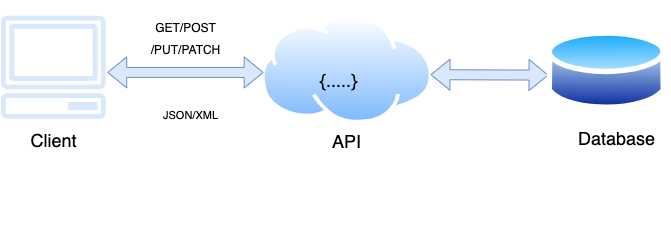
XML isn’t widely supported by frameworks without transforming the data ourselves to something that can be used, and that’s usually JSON. We can’t manipulate this data as easily on the client-side, especially in browsers. It ends up being a lot of extra work just to do normal data transfer.
In Next.js, you can handle errors by wrapping route logic in try-catch blocks and using the response object to send error details to the client. Dynamic API routes allow you to handle requests with varying path parameters, making your API flexible and capable of responding to a broader range of queries. In Next.js, you create dynamic routes by adding square brackets to the file name within your pages/api directory. To begin, you need to create a new file in the pages/api directory of your Next.js project. The basic setup involves creating a simple handler function that will respond to HTTP requests.
So it would be a wise decision to move the services folder also into a specific version folder. There are many different approaches to handling versioning inside an Express API. In our case I'd like to create a sub folder for each version inside our src directory called v1. One good practice is to add a path segment like v1 or v2 into the URL. The script makes sure that the development server restarts automatically when we make changes (thanks to nodemon).




No comments:
Post a Comment